
Many aspiring Filipino teachers are intrigued by the opportunity to migrate to Australia for better career prospects and personal growth. To achieve this, it’s necessary for you to understand the PR requirements that govern this process. Your pathway to permanent residency includes fulfilling educational qualifications, gaining relevant teaching experience, and successfully completing a skills assessment. Additionally, familiarizing yourself with the visa options available to teachers can empower you to make informed decisions and transition smoothly into your new life in Australia.
Key Takeaways:
- Filipino teachers must obtain a teaching qualification assessed by the Australian Institute for Teaching and School Leadership (AITSL).
- Proficiency in English is a requirement, typically demonstrated through tests like IELTS or PTE.
- Teachers should gather necessary documentation, including academic transcripts, proof of teaching experience, and a valid passport.
- Visa options include the Skilled Independent Visa (subclass 189) and the Temporary Skill Shortage Visa (subclass 482), depending on individual qualifications.
- Registration with a teacher’s regulatory authority in the state or territory where they intend to work is crucial.
- Participation in a skills assessment process may be needed to confirm qualifications and experience align with Australian standards.
- Researching specific state requirements and processes can provide additional guidance for those migrating to Australia.
Legal Framework for Teacher Migration to Australia
Your understanding of the legal framework governing teacher migration is crucial for successfully navigating the Australian immigration system. Various laws and regulations set the stage for how educators, specifically from the Philippines, can seek employment and permanent residency in Australia. Adhering to these regulations ensures that you meet the necessary standards for educational qualifications, skills assessments, and visa applications, positioning you for a smoother migration experience.
Key Legislation Impacting Filipino Teachers
Several significant pieces of legislation affect your journey as a Filipino teacher migrating to Australia. The Migration Act 1958 and its accompanying regulations dictate the overall immigration rules, while the Australian Qualifications Framework (AQF) plays a vital role in defining acceptable educational standards. Additionally, the Education Services for Overseas Students (ESOS) Act ensures that international students receive a quality education, which is important if you consider enrolling in further studies in Australia to enhance your qualifications.

Visa Categories Appropriate for Educators
For teachers like you, various visa categories exist that cater specifically to educators. The Skilled Independent Visa (subclass 189) and the Employer Sponsored Visa (subclass 482) are popular options. These visas allow you to live and work in Australia, granted you meet specific criteria, including your qualifications and skills assessments. Ultimately, the right visa choice can impact your long-term prospects in the Australian education system.
The Skilled Independent Visa (subclass 189) allows you to live and work permanently in Australia without needing a sponsor. To qualify, you must pass a points test, which considers your age, education, and relevant work experience. Alternatively, the Employer Sponsored Visa (subclass 482) enables you to work in Australia for an approved employer on a temporary basis. This option can lead to permanent residency through employer sponsorship after fulfilling certain conditions. Understanding these options, along with their specific requirements, is vital for creating a successful migration strategy tailored to your qualifications and career goals.

Credential Evaluation: Ensuring Your Qualifications Are Recognized
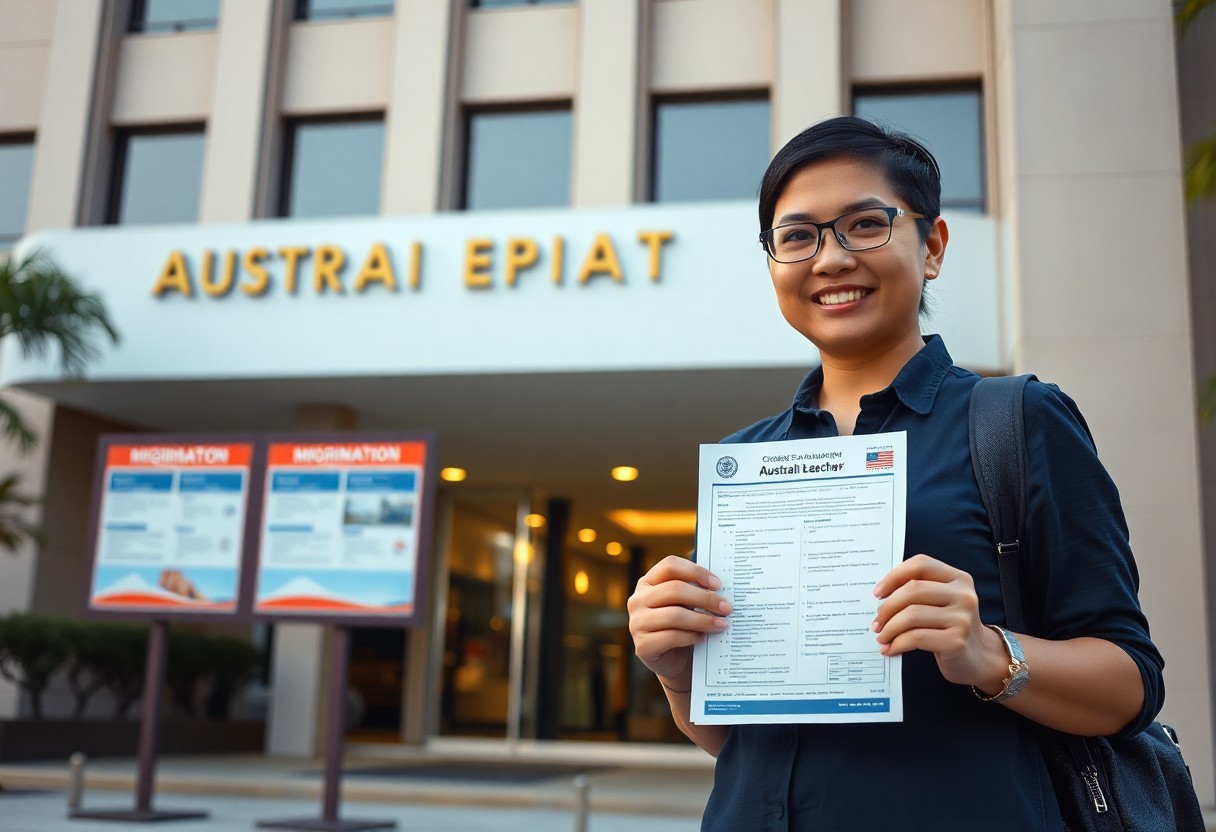
A successful migration experience hinges on obtaining the right recognition for your teaching qualifications. Credential evaluation verifies that your qualifications align with Australian standards, which is vital for gaining employment and securing permanent residency. The evaluation process assesses the content, duration, and level of your education, so understanding the procedure can significantly impact your migration journey.
Organizations Responsible for Credential Assessment
The main bodies responsible for credential assessment in Australia are the Australian Institute for Teaching and School Leadership (AITSL) and the Victoria Institute of Teaching (VIT), among others. As a Filipino teacher, your first point of contact will often be AITSL, which specifically evaluates teaching qualifications and ensures they match the standards set for Australian educators. Familiarizing yourself with their requirements can streamline your application process.
Common Challenges and How to Overcome Them
Filipino teachers face various challenges during the credential evaluation process, including difficulty in obtaining required documentation and inconsistent educational frameworks between the Philippines and Australia. Gathering complete and accurate records is crucial, as any discrepancies can delay the assessment. Additionally, the lengthy processing times for evaluations often lead to frustration.
To navigate these common challenges effectively, proactive steps can be taken. Start by contacting your educational institutions to request official transcripts and course descriptions well in advance. If specific documents are unavailable, a detailed letter explaining your situation could prove helpful. Engaging with other Filipino teachers who have undergone the evaluation process can provide valuable insights, allowing you to understand potential pitfalls and speed up your own assessment timeline. Furthermore, timing your application during less busy periods can reduce stress and waiting times significantly.
Language Proficiency: The Gateway to Employment
Your success in securing a teaching position in Australia significantly hinges on your language proficiency. The Australian job market demands educators who can engage effectively with diverse student populations and their parents. Proficiency in English not only enhances teaching but also facilitates communication within the education system. Understanding the nuances of the language can greatly affect your ability to reach students and connect with colleagues. Meeting specific language requirements is, therefore, a vital step in your professional journey.
Required Language Tests and Scores
Filipino teachers looking to migrate must take the International English Language Testing System (IELTS) or the Occupational English Test (OET) to validate their English proficiency. For IELTS, a minimum overall score of 7.5 is typically required, with no band lower than 7.0. In contrast, the OET requires a grade of B or higher in all four components. Fulfilling these criteria is imperative to ensure your qualifications are recognized in Australia.
Strategies for Achieving Proficiency
To enhance your English proficiency effectively, consider immersing yourself in English-speaking environments and utilizing various educational resources. Regular practice through conversation exchange programs, online courses, and language apps can accelerate your learning. Engaging with native speakers and consuming English media—such as podcasts, books, or videos—will reinforce your language skills and boost your confidence in using English in professional settings.
Participating in English-speaking clubs or community events can provide opportunities for practical language application, encouraging you to hold discussions and present ideas in English. Additionally, tailored courses focusing on academic or professional English can hone the specific vocabulary and skills relevant to teaching. Consistency is key; setting daily goals for practice, such as writing reflections or summarizing learnings, can also contribute to improving fluency and comprehension effectively. Striving for continuous improvement and immersing yourself in diverse linguistic contexts will prepare you to meet the language requirements and achieve your teaching ambitions in Australia.
The Role of Professional Development in Migration Success
Engaging in professional development plays a pivotal role in enhancing your employability as you transition to teaching in Australia. Continuous learning not only boosts your skills but also demonstrates your commitment to the profession. Schools and educational institutions often prefer candidates who are up-to-date with modern teaching practices and methodologies, making professional development an imperative part of your migration strategy.
Pre-Migration Training Opportunities
Before migrating, you can take advantage of various pre-migration training opportunities that focus on Australian educational standards and practices. Workshops, webinars, and courses designed specifically for overseas teachers can provide insights into the local curriculum, teaching philosophies, and cultural expectations, allowing you to adapt smoothly once you arrive.
Continuing Education Post-Migration
Upon settling in Australia, pursuing continuing education is vital for your professional growth and integration into the educational landscape. Enrolling in local university courses, attending workshops, or obtaining certifications tailored to the Australian education system can enrich your teaching practices and expand your professional network.
Participating in continuing education not only enhances your skills but also helps you understand the nuances of the Australian educational environment. Programs such as the Australian Professional Standards for Teachers guide ongoing development and can lead to better job prospects. Additionally, networking with other educators through seminars or study groups can open doors to employment opportunities and provide invaluable support during your transition.

Navigating the Job Market: Finding Teaching Opportunities
Exploring the Australian job market requires a proactive approach to secure teaching positions. Start by leveraging job boards, recruitment agencies, and educational institutions’ websites specifically targeting overseas teachers. Platforms like Seek, Indeed, and the Australian JobSearch website regularly list vacancies tailored for educators. Networking with fellow Filipino teachers and participating in workshops can also unveil hidden opportunities, allowing you to connect with key players in the education sector.
Popular Destinations for Filipino Teachers in Australia
Australian states such as New South Wales, Victoria, and Queensland are popular for Filipino teachers seeking employment. Sydney and Melbourne are particularly attractive due to their diverse communities and high demand for educators. Moreover, regional areas often experience teacher shortages, providing numerous opportunities for relocation to locations like Tasmania or Northern Territory, where your skills can be greatly valued.
Effective Job Search Strategies and Resources
Your job search can be greatly enhanced by utilizing educational networks and resources designed for overseas teachers. Engage with online forums and social media groups where educators share insights and job leads specific to your qualifications. Additionally, consider joining professional associations like the Australian Council for Educational Leaders (ACEL) or the Australian Education Union (AEU), which offer job postings and networking events tailored to teachers.
Participating in webinars and workshops can broaden your understanding of the Australian education system while allowing you to showcase your abilities to potential employers. Crafting a standout CV tailored to Australian standards and emphasizing your unique qualifications as a Filipino educator can significantly boost your chances. Using platforms like LinkedIn to display your experience and connect with hiring managers can be a game-changer in your job search. Moreover, seeking guidance from career counselors who specialize in migration can help you navigate this complex landscape more effectively.
Conclusion
Presently, as you consider migrating to Australia as a Filipino teacher, it is crucial to thoroughly understand the PR requirements that apply to your situation. Ensuring that you meet these criteria will facilitate a smoother transition into the Australian education system. Familiarizing yourself with qualifications recognition, English proficiency, and visa options will empower you to navigate this process effectively, paving the way for your successful teaching career in Australia.
FAQ
Q: What are the basic requirements for Filipino teachers to migrate to Australia?
A: Filipino teachers looking to migrate to Australia need to meet several basic requirements, including holding a recognized teaching qualification, demonstrating English language proficiency (typically through exams such as IELTS or PTE), obtaining a positive skills assessment from the relevant Australian authority (such as AITSL), and fulfilling health and character assessment standards.
Q: How can I assess my qualifications for teaching in Australia?
A: To have your qualifications assessed, you will need to apply to the Australian Institute for Teaching and School Leadership (AITSL). They will evaluate your educational credentials, teaching experience, and any additional qualifications against Australian standards. You may need to submit documents like your degree certificates, transcripts, and proof of teaching experience.
Q: What English language tests are accepted for teachers migrating to Australia?
A: Accepted English language tests for Filipino teachers include the International English Language Testing System (IELTS), Pearson Test of English (PTE), Occupational English Test (OET), and Cambridge English: Advanced. Candidates typically need to achieve a specific score based on the requirements set by AITSL or their preferred visa pathway.
Q: Are there specific visa options available for Filipino teachers?
A: Yes, there are specific visa options available for teachers, including the Skilled Independent Visa (subclass 189), the Skilled Nominated Visa (subclass 190), and the Temporary Skill Shortage Visa (subclass 482). Each visa has its own eligibility criteria, and teachers should choose the one that best aligns with their qualifications and circumstances.
Q: Do I need work experience to qualify for PR in Australia as a teacher?
A: Yes, work experience is generally a requirement for the Permanent Residency (PR) application process. Most visa pathways require you to demonstrate at least two years of relevant teaching experience. This experience must be documented and, in some cases, might need to be in a specific educational setting or role.
Q: How can I find job opportunities as a teacher in Australia?
A: Job opportunities can be found through various platforms, including Australian government job boards, recruitment agencies specializing in education, university job portals, and teaching-specific online job boards. Networking with other educators and joining professional teaching associations in Australia can also lead to potential job leads and introductions.
Q: What steps should I take if my qualifications are not recognized in Australia?
A: If your qualifications are not recognized, you may consider undergoing additional training or obtaining further qualifications that meet Australian standards. This could involve taking bridging courses, enrolling in teacher education programs in Australia, or pursuing recognition through relevant local educational institutions to align your qualifications with Australian requirements.