
Over the years, many Filipino nurses have found rewarding career opportunities in Australia through its migration services. You can take advantage of this chance to enhance your professional journey and experience a new cultural environment. However, it’s important to navigate this process carefully, as understanding the visa requirements and credential verification is vital for your success. With the right information and support, you can secure your place in Australia’s healthcare system and enjoy the benefits of working in a diverse and dynamic setting.
Key Takeaways:
- Australia offers various visa options for Filipino nurses to migrate, including employer-sponsored and skilled visas.
- Filipino nurses must meet registration requirements with the Nursing and Midwifery Board of Australia (NMBA) to practice in Australia.
- English language proficiency, typically demonstrated through the IELTS or OET exams, is vital for visa eligibility and professional registration.
- Applicants may need to undergo skills assessment through the Australian Nursing and Midwifery Accreditation Council (ANMAC).
- Job opportunities for nurses in Australia are abundant, especially in rural and underserved areas.
- Migration pathways may include family reunification provisions depending on individual circumstances.
- Comprehensive planning and legal advice can enhance successful transition and settlement in Australia.
Overview of Australia’s Migration Services
Australia’s migration services provide pathways for skilled professionals, including nurses, to live and work in the country. The Department of Home Affairs oversees various programs designed to meet labor shortages and attract qualified individuals. With a structured approach to immigration, you can access support and resources that simplify the application process.
Types of Visas for Nurses
Several visa options are available for nurses seeking to migrate to Australia:

- Skilled Independent Visa (subclass 189)
- Skilled Nominated Visa (subclass 190)
- Temporary Skill Shortage Visa (subclass 482)
- Employment Nomination Scheme Visa (subclass 186)
- Registered Nurse Visa (subclass 482)
After choosing the appropriate visa, you can begin the application process to fulfill your dream of working in Australia.
| Visa Type | Description |
| Skilled Independent Visa | No sponsorship required, based on points system. |
| Skilled Nominated Visa | Requires nomination from a state or territory. |
| Temporary Skill Shortage Visa | Employer-sponsored for short-term employment. |
| Employer Nomination Scheme Visa | For permanent employment with an Australian employer. |
| Registered Nurse Visa | Specific to registered nurses wanting to work in Australia. |
Eligibility Requirements
To be eligible for migration as a nurse, you must meet specific requirements set by the Australian government. These typically include holding an appropriate nursing qualification, relevant work experience, English language proficiency, and registration with the Nursing and Midwifery Board of Australia (NMBA).

Meeting the eligibility requirements often involves proving your competency through various assessments. This includes obtaining an International English Language Testing System (IELTS) score or equivalent, along with proving that you hold a recognized nursing qualification. Furthermore, you may need to complete a skills assessment with the Australian Nursing and Midwifery Accreditation Council (ANMAC) to validate your experience and education. Submitting accurate documentation and demonstrating compliance with these criteria is key to a successful application process.
The Nursing Profession in Australia
The nursing profession in Australia is recognized for its high standards and strong regulatory framework. Australian nurses often work in well-resourced healthcare settings, providing diverse services from acute care to community health. You’ll find a focus on patient-centered care and interdisciplinary collaboration, which enhances your professional development and job satisfaction.
Demand for Filipino Nurses
Filipino nurses are in high demand in Australia, responding to the country’s aging population and increasing healthcare needs. With your skills and expertise, you can fill significant gaps in the workforce, particularly in rural and regional areas where there are severe shortages. The Australian government actively encourages international nurses to migrate, making it an opportune time for you to consider this pathway.
Registration and Licensing Process
Navigating the registration and licensing process in Australia is necessary for practicing as a nurse. You must apply to the Nursing and Midwifery Board of Australia (NMBA) to gain registration, demonstrating your qualifications, proficiency in English, and meeting other criteria specific to your nursing specialty.
To successfully register, provide proof of your nursing qualifications and work experience, along with passing an English proficiency test if applicable. The NMBA also requires you to complete an assessment, which might include a bridging program if your qualifications do not meet Australian standards. Understanding these requirements ensures you prepare adequately for a seamless transition into the Australian nursing workforce.
Steps to Migrate as a Filipino Nurse
Pre-Migration Preparation
Your journey begins with researching the Australian healthcare system and understanding the demand for nurses in specific regions. Focus on obtaining necessary documentation, such as your nursing license, academic transcripts, and English language proficiency test results. Assess your qualifications against Australian standards and prepare for possible credential evaluations, ensuring you meet the guidelines set by the Nursing and Midwifery Board of Australia (NMBA).
Application Process
The application process involves several key steps. Start by submitting an Expression of Interest (EOI) through the SkillSelect system, where you must provide detailed information about your qualifications and work experience. Following this, you may receive an invitation to apply for a visa, which initiates the formal application to the Department of Home Affairs. Ensure all documents are accurate and complete to avoid delays.
Upon receiving your invitation, you will need to apply for the appropriate visa, such as the Skilled Independent Visa (subclass 189) or the Skilled Nominated Visa (subclass 190). Completing the visa application accurately is critical; you’ll submit documents that demonstrate your qualifications and English proficiency, along with a health assessment and police checks. Processing times may vary, but generally, you can expect to wait several months before obtaining a decision. Patience and attention to detail will greatly influence your success in this phase.
Support Services for Migrating Nurses
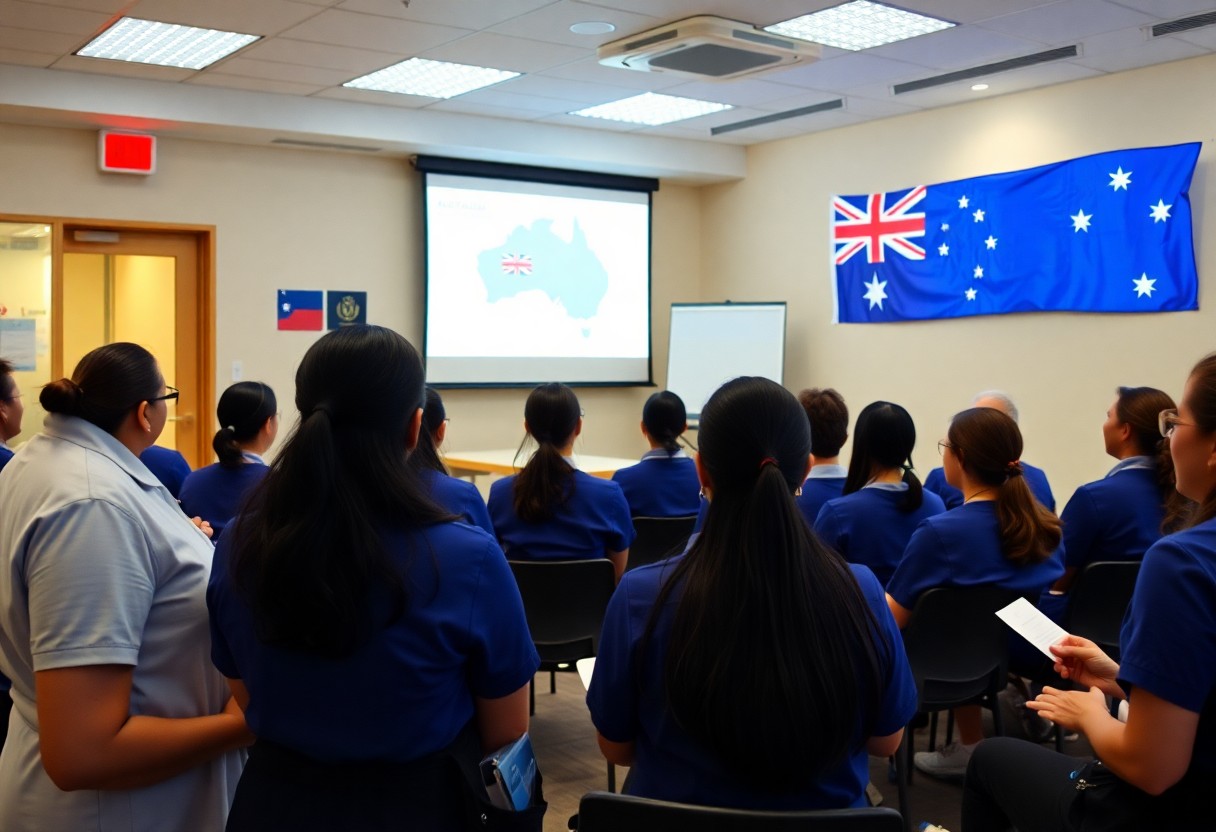
The journey to secure a nursing position in Australia involves more than just qualifications and assessments. You benefit from an array of support services designed to ease the transition, ensuring a smoother experience adapting to a new work environment and culture. These services include professional guidance, resource access, and personalized assistance tailored to your specific needs, helping you navigate every step of the migration process effectively.
Job Placement Assistance
Upon migration, finding the right job can be a challenge. With job placement assistance, you receive tailored support to connect with hospitals and healthcare facilities seeking skilled nurses. This service streamlines your employment search, enhancing your chances of finding roles that match your expertise and preferences.
Community Resources
Accessing local community resources is vital for a successful transition. These resources include networking opportunities, mentorship programs, and workshops aimed at helping you integrate into the Australian community while building professional connections. You can leverage these connections to enhance your career prospects and settle into your new life.
Community resources often extend beyond professional networks. Organizations frequently host orientation sessions focused on cultural adaptation, legal rights, and healthcare practices in Australia. You may find local Filipino groups that provide a sense of belonging, sharing experiences, and tips on daily living. Engaging with these resources can significantly enrich your experience and help ease some challenges associated with migration.
Challenges Faced by Migrating Nurses
Migrating as a nurse to Australia entails several challenges that can impact your transition. You may face issues such as lengthy visa processes, recognition of your qualifications, and adapting to a different healthcare system. Furthermore, financial constraints, including relocation costs and initial adjustment to a new lifestyle, can add to the stress. Understanding these challenges is necessary in preparing for a successful move.
Cultural Adjustments
Cultural adjustments significantly affect your experience as a migrating nurse. You will encounter various social norms, communication styles, and workplace expectations that may differ from what you’re used to. Embracing these differences while maintaining your cultural identity can help you build rapport with colleagues and patients alike.
Professional Integration
Professional integration presents its own set of hurdles. You may find that adapting to ≤strong>Australia’s healthcare protocols and operational frameworks requires additional time and effort. Not only will you need to familiarize yourself with the local medical practices, but also with the Australian nursing codes of conduct and regulations governing the profession.
Effective professional integration is key to your success in Australia. Engaging in continuous professional development can enhance your skill set and improve your confidence in a new setting. Many healthcare facilities offer orientation programs designed for international nurses. Networking with fellow Filipino nurses or joining local nursing associations can provide valuable support, resources, and insights, easing your transition into the Australian healthcare environment. Additionally, understanding local medical terminologies and procedures will greatly benefit your ability to work collaboratively with healthcare teams and deliver quality patient care. Inclusion in workplace activities and social gatherings can also help you feel more connected and valued in your new role.
Success Stories of Filipino Nurses in Australia
Filipino nurses have achieved remarkable success in Australia, showcasing their resilience and dedication. Many have adapted to new work environments and earned recognition for their skills. The stories of these professionals highlight their significant contributions to the healthcare system, as they bring unique perspectives and cultural competency that enhance patient care. Their success not only reflects their personal commitment but also underscores the valuable role of Filipino nurses in addressing Australia’s healthcare demands.
Case Studies
Several case studies illustrate the achievements of Filipino nurses in Australia, showcasing the diverse paths they’ve taken to thrive in their careers.
- Maria Santos: Transitioned from a nurse in the Philippines to a team leader in a Sydney hospital, improving patient care ratings by 30%.
- John Reyes: Helped establish a community health program that increased access to healthcare for over 2,000 underserved individuals.
- Lina Cruz: Achieved recognition as the Employee of the Year in a Brisbane hospital, contributing to a 25% reduction in patient wait times.
- Eduardo Lopez: Successfully mentored more than 10 new Filipino nurses, aiding their integration and professional growth in Australia.
Impact on Communities
The presence of Filipino nurses in Australia has significantly influenced local communities. By bridging cultural gaps and providing language support, these professionals enhance patient interaction and trust within healthcare settings. Their involvement in community health initiatives fosters improved access to care, especially for marginalized groups. The economic contributions from their employment, along with their community engagement, create a ripple effect that benefits families and neighborhoods, promoting overall wellness and cultural diversity in Australia.
Final Words
Hence, as you explore the opportunities within the Australia Migration Service for Filipino nurses, you are positioned to benefit from a robust healthcare system that values your skills and dedication. By understanding the requirements and processes, you can navigate your migration journey with confidence. Embracing this chance not only enhances your professional experience but also enriches your personal life in a vibrant, multicultural society. Take the necessary steps to secure your future and leverage the support available to you throughout this transition.
FAQ
Q: What qualifications do Filipino nurses need to migrate to Australia?
A: Filipino nurses must have a valid nursing degree, recent clinical experience, and pass the English language proficiency tests, such as IELTS or OET.
Q: How can Filipino nurses apply for a nursing job in Australia?
A: Filipino nurses can apply through registered recruitment agencies, online job portals, or directly on the websites of Australian healthcare providers.
Q: What Visa should Filipino nurses apply for to work in Australia?
A: Filipino nurses typically apply for the Temporary Skill Shortage Visa (subclass 482) or the Skilled Independent Visa (subclass 189) depending on their qualifications and job offers.
Q: Is it necessary for Filipino nurses to have their qualifications assessed?
A: Yes, evaluations of qualifications and competencies by the Australian Nursing and Midwifery Accreditation Council (ANMAC) are required before lodging a visa application.
Q: What is the process for getting registered as a nurse in Australia?
A: The process includes submitting an application to the Nursing and Midwifery Board of Australia (NMBA), undergoing qualification assessment, and providing English test results.
Q: What are the financial costs involved in migrating to Australia as a nurse?
A: Costs may include assessment fees, visa application fees, English test fees, flight costs, and initial living expenses, which can vary based on individual circumstances.
Q: Are there any age limits for Filipino nurses wanting to migrate to Australia?
A: Generally, skilled visa applicants must be under 45 years old at the time of application, though age exemptions may apply based on occupation or other factors.