
With the right information, you can navigate the Skilled Occupation List (SOL) for Filipino migrants seeking to build a new life in Australia. This list identifies occupations that are in demand, making it easier for you to secure a visa and find employment. Understanding what skills are needed not only boosts your chances of a successful application but also enhances your opportunities in the Australian job market. Explore this informative guide to discover how your profession fits into the SOL and take a step closer to your migration goals.
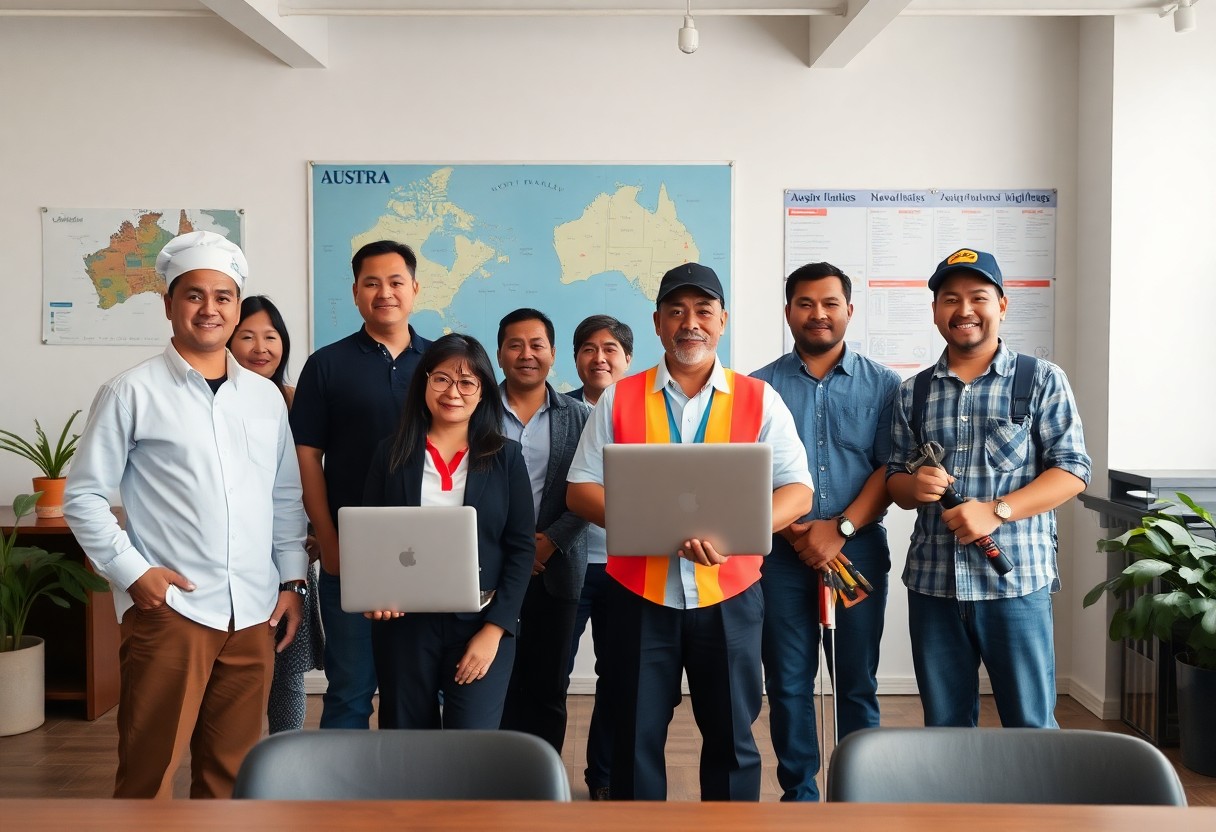
Key Takeaways:
- Australia has a Skilled Occupation List (SOL) that identifies occupations in demand, guiding Filipino migrants in their job selection.
- The SOL is regularly updated, reflecting changes in the Australian labor market and employment opportunities for skilled workers.
- Filipino migrants can increase their chances of obtaining a visa by aligning their skills and qualifications with listed occupations.
- The points-based immigration system awards points for skills, work experience, and age, all relevant to the occupations on the SOL.
- Professional recognition and qualification assessments may be required to ensure that skills meet Australian standards.
- Regional areas in Australia may offer additional incentives for skilled migrants, including different lists of in-demand occupations.
- Awareness of state-specific requirements can enhance job prospects as some states have their own skilled occupation lists and nomination processes.


The Shift in Demand: Why Australia Needs Filipino Migrants
Australia’s economy is undergoing significant transformation, resulting in a heightened demand for skilled workers from diverse backgrounds. With an aging population and an ever-expanding job market, the country is facing critical labor shortages in various sectors. The immigration policies have shifted, allowing skilled migrants, particularly from countries like the Philippines, to fill these gaps. Filipino migrants are increasingly recognized for their strong work ethic, adaptability, and English language proficiency, aligning perfectly with Australia’s evolving workforce needs.
Key Industries Driving Demand
Several key industries are at the forefront of Australia’s demand for skilled migrants. The healthcare sector, for example, requires a vast number of workers to cater to its aging population. Engineering and information technology are also experiencing rapid growth, fueled by innovation and technological advancements. Moreover, the hospitality and service industries continuously seek skilled individuals to meet the needs of their diverse clientele, all of which creates ample opportunities for you as a Filipino migrant.

The Role of Filipino Expertise in the Australian Workforce
Filipino expertise is becoming a vital component of the Australian workforce, particularly in areas where cultural competence and specific skill sets align. As a Filipino migrant, you bring not only technical skills but also a unique cultural perspective that enhances collaboration in multicultural workplaces. Filipino professionals are often well-trained in healthcare, engineering, and education, with many holding internationally recognized qualifications. The ability to communicate effectively and work cohesively among diverse teams further contributes to the overall productivity and innovation in Australian businesses.
Moreover, the extensive presence of Filipino workers in Australia reflects a strong network and community support system, allowing new migrants to adapt quickly and thrive. Filipino nurses, for instance, are highly sought after in Australia due to their expertise, compassionate care, and ability to work in high-pressure environments. This demand is evidenced by programs allowing skilled healthcare workers to immigrate swiftly, showcasing how your qualifications can directly align with Australia’s labor needs.
Decoding the Skilled Occupation List: What Filipino Migrants Need to Know
Overview of the Skilled Occupation List
The Skilled Occupation List (SOL) serves as a vital resource for Filipino migrants seeking employment opportunities in Australia. This list outlines occupations that are currently in demand, allowing potential applicants to align their skills with the needs of the Australian labor market. By referring to the SOL, you can identify which professions qualify for various visa applications and make informed career choices based on market trends.
Specific Occupations Relevant to Filipino Migrants
Several occupations within the Skilled Occupation List are particularly suited for Filipino migrants, reflecting the skills and qualifications that many possess. Roles in the healthcare sector—including nurses, aged care workers, and medical technicians—are among the most sought after. Additionally, professions in engineering, hospitality, and information technology also feature prominently, offering numerous pathways for skilled individuals.
Specific positions such as registered nurses are in high demand, with Australia projected to require over 85,000 new nurses by 2025. Likewise, professionals in the Information Technology sector, such as software engineers and cybersecurity specialists, can find ample opportunities, particularly as Australia focuses on digitization and innovation. These high-demand roles not only offer competitive salaries but also provide the chance for career advancement, making them ideal for Filipino migrants looking to establish a successful life in Australia.
Navigating the Visa Process: A Step-by-Step Guide
Embarking on your journey to migrate to Australia involves understanding the visa process. Start by selecting the appropriate visa category that aligns with your qualifications and experience. You’ll need to gather necessary documentation, such as your skills assessment and language proficiency results, before submitting your application. Following application submission, wait for your visa to be processed, and prepare for potential interviews or additional documentation requests.
Types of Visas Available for Skills-Based Migration
| Visa Type | Description |
|---|---|
| Skilled Independent Visa (subclass 189) | A points-tested visa for skilled workers not sponsored by an employer. |
| Skilled Nominated Visa (subclass 190) | Requires nomination by a state or territory government. |
| Employer-Sponsored Visa (subclass 482) | For skilled workers sponsored by an approved employer. |
| Skilled Work Regional (Provisional) Visa (subclass 491) | A temporary visa for skilled workers wanting to live in regional areas. |
| Permanent Residence (Skilled Regional) Visa (subclass 191) | Pathway for those who hold a provisional visa and meet residency requirements. |
- Skilled Independent Visa for those without employer sponsorship.
- Skilled Nominated Visa requires nomination from a state or territory.
- Employer-Sponsored Visa for workers with employer backing.
- Skilled Work Regional Visa targets those willing to live in regional areas.
- Permanent Residence Visa can be sought following a provisional visa.
Thou must understand that each visa type comes with unique requirements and obligations, so align your skills and aspirations accordingly as you ponder your options.
Essential Documentation and Requirements
A successful application necessitates well-prepared documentation that proves your qualifications and experience. Common paperwork includes your skills assessment, proof of English language capability through tests like IELTS or PTE, identification documents, and any other supporting evidence relevant to your occupation on the Skilled Occupation List. Ensure all documents are certified before submission, as failure to provide necessary paperwork may delay your application.
Thou will find that careful attention to the required documentation streamlines the visa process significantly. For the Skilled Independent Visa, you may need to submit qualifications, employment references for at least four years, skill assessment results, and continuously updated police clearance certificates. Similarly, the Skilled Nominated and Employer-Sponsored Visas demand a solid application showcasing relevant skills and qualifications in line with your chosen occupation. Thoroughly reviewing all guidelines set forth by the Department of Home Affairs will facilitate an efficient migration journey.
Success Stories: Inspirational Journeys of Filipino Migrants
Many Filipino migrants have carved out remarkable paths in Australia, transforming challenges into opportunities. Their stories exemplify resilience, hard work, and the unwavering spirit of community. From skilled professionals excelling in their industries to entrepreneurs establishing thriving businesses, these individuals embody the diverse contributions that Filipino migrants bring to their new home. Their journeys inspire others to follow suit, proving that migration can lead to abundant personal and professional growth.
Personal Accounts of Migration and Integration
Every Filipino migrant’s journey to Australia is unique, shaped by personal aspirations, challenges, and experiences. Many recount their intellectual and emotional growth as they navigated new social landscapes and learned to adapt to Australia’s cultural dynamics. Stories often highlight the strength found in community ties, showcasing how support networks among fellow Filipinos foster confidence and ease the transition into life in a new country.
Tips from Successful Migrants
Successful Filipino migrants share valuable insights that can pave the way for newcomers initiateing on their own journeys. Engaging with local communities, volunteering, and pursuing continuous education is often emphasized as imperative strategies for integration. Creating an Australian-style resume and networking through local events can also enhance your job search.
- Build a support network
- Embrace continuous learning
- Invest in effective networking
Perceiving each interaction as a learning opportunity is vital to thriving in a new environment.
Successful migrants understand that thriving in a new country involves being proactive and open to change. They recommend extending your reach beyond familiar circles and utilizing platforms such as LinkedIn, local meet-ups, and community organizations. This engagement leads to enhanced employment prospects and deeper cultural immersion.
- Attend local events
- Actively seek mentoring opportunities
- Participate in cultural exchanges
Perceiving these experiences as stepping stones can transform your migration journey into a fulfilling adventure.

The Economic Impact of Filipino Workers in Australia
Filipino workers significantly boost the Australian economy through their diverse contributions across various sectors. Bringing unique skill sets and a strong work ethic, you can see many Filipinos excelling in healthcare, engineering, and hospitality, which are vital to sustaining economic productivity. In 2021 alone, Filipino migrants contributed an estimated $1 billion in taxes, showcasing their imperative role in supporting the country’s growth and stability.
Contributions to Local Economies
The presence of Filipino workers generates a substantial impact on local economies. You play a key role in filling gaps in the workforce, particularly in industries that suffer from labor shortages. Your spending on goods and services leads to increased demand, thereby stimulating business growth and creating more job opportunities within your communities.
Addressing Labor Shortages and Economic Growth
By addressing labor shortages, Filipino workers are not only enhancing operational efficiencies but also driving economic growth. Your involvement in sectors like aged care and construction helps in meeting the increasing demand for imperative services. For instance, the Australia government projects a shortfall of around 200,000 skilled workers in various industries by 2024, and Filipino migrants are set to play a vital role in bridging this gap.
This influx of skilled workers from the Philippines can significantly alleviate Australia’s labor shortages in critical sectors. Positions unfilled due to a native skills gap find their candidates through your expertise, keeping services operational and productive. As the economy expands, your presence becomes even more important, helping to support sustainability and innovation that leads to long-term positive impacts. Emphasizing inclusivity and education in skilled sectors ensures that the benefits of economic growth are shared, turning local challenges into opportunities for prosperity.
Conclusion
Drawing together the information regarding the Skilled Occupation List for Filipino migrants to Australia, it is crucial for you to familiarize yourself with the specific occupations in demand, as these can significantly influence your migration journey. Understanding the requirements and processes associated with these occupations can enhance your chances of successfully obtaining a visa and settling in Australia. By aligning your skills with the needs of the Australian workforce, you position yourself favorably in this competitive environment, paving the way for a brighter future in your new home.
FAQ: Skilled Occupation List for Filipino Migrants to Australia
Q: What is the Skilled Occupation List (SOL)?
A: The Skilled Occupation List (SOL) is a compilation of occupations that Australia needs skilled workers for. These occupations are important for filling gaps in the labor market and are identified by the Australian government. The SOL is updated regularly to reflect the current demands in various industries, and it serves as a guide for migrants, including those from the Philippines, seeking to work in Australia through skilled migration programs.
Q: How can I find if my occupation is on the Skilled Occupation List?
A: To determine if your occupation is included in the Skilled Occupation List, you can visit the official website of the Australian Department of Home Affairs. There, you can find an updated list of eligible occupations along with their corresponding ANZSCO codes. If your occupation appears on this list, you may qualify for various skilled migration visas.
Q: What types of visas are available for skilled migrants from the Philippines?
A: There are several visa options available for skilled migrants, including the Skilled Independent Visa (subclass 189), Skilled Nominated Visa (subclass 190), and Skilled Work Regional (Provisional) Visa (subclass 491). Each visa category has different requirements, including sponsorship from an Australian state or territory for some. It is advisable to review the specific requirements and select the visa option that best suits your qualifications.
Q: Is there a points test for skilled migration to Australia?
A: Yes, Australia uses a points-based immigration system for skilled migration. Applicants are assessed based on various criteria, including age, education, work experience, English language proficiency, and other factors. The total points you accumulate will determine your eligibility for certain visas. Generally, the higher the points, the better your chances of receiving an invitation to apply for a visa.
Q: What English language qualifications are accepted for skilled migration?
A: For skilled migration, accepted English language qualifications include tests such as the International English Language Testing System (IELTS), the Test of English as a Foreign Language (TOEFL), the Pearson Test of English (PTE), and others. Each visa subclass may have different minimum score requirements, so it’s important to check the specific requirements for the visa you are applying for.
Q: Can my work experience in the Philippines be counted towards my migration application?
A: Yes, work experience acquired in the Philippines can be counted towards your migration application, provided that it is relevant to the occupation you are applying for and meets Australian standards. You may need to provide evidence of your work experience through references or employment certificates to demonstrate your skills and expertise in your field.
Q: What should I do if my occupation is not on the Skilled Occupation List?
A: If your occupation is not listed on the Skilled Occupation List, you may explore other migration pathways, such as the Employer-sponsored program, where you can be sponsored by an Australian employer. Additionally, you might consider upgrading your skills, gaining further qualifications, or seeking guidance from a registered migration agent who can help you explore alternative options for migration to Australia.