
It’s vital to understand how the Subclass 491 Regional Visa can significantly enhance your immigration prospects in Australia. This visa not only allows you to live and work in designated regional areas but also offers pathways to permanent residency. By meeting specific regional requirements, you gain access to additional financial benefits and community support, making it an attractive option for skilled migrants. With the right approach, you can leverage these advantages to secure a stable and fulfilling life in Australia.
Key Takeaways:
- Enables skilled workers to live and work in regional areas of Australia for five years.
- Pathway to permanent residency through the Subclass 191 visa after three years of holding the 491 visa.
- Access to a wider range of job opportunities in regional areas with a lower competition level.
- Eligible family members can be included in the visa application, providing extended benefits.
- Significant financial incentives and support available in regional areas, including lower living costs.
- Can apply for regional scholarships and grants specific to skilled workers and families.
- Opportunity for improved work-life balance in less populated and more serene environments.

Overview of the Subclass 491 Visa
The Subclass 491 Regional Visa is designed for skilled workers willing to live and work in designated regional areas of Australia. This visa facilitates both permanent residence pathways and enables you to contribute to regional economies. By securing this visa, you gain access to a range of opportunities while addressing Australia’s demand for skilled labor outside major urban centers.

Eligibility Criteria
To qualify for the Subclass 491 Visa, you must be under 45 years old, possess a relevant skill that meets Australia’s needs, and have a positive skills assessment. Additionally, you should be nominated by an Australian state or territory or sponsored by an eligible family member residing in a regional area. Meeting the English language requirement is also necessary to ensure effective communication in the workplace.
Application Process
The application for the Subclass 491 Visa includes several integral steps, from obtaining a skills assessment to submitting your visa application online. After securing a nomination or sponsorship, you need to gather relevant documents, including your identity, employment history, and qualifications for your skills assessment. An invitation to apply will follow, where you must prepare and submit all necessary documentation to meet the visa criteria.

Initially, you will need to submit an Expression of Interest (EOI) through the SkillSelect system, detailing your skills, qualifications, and occupation. Once your EOI is accepted, you may receive an invitation to apply based on points scored, including your age, work experience, and educational qualifications. Following this, you have 60 days to lodge your application, providing documented evidence supporting your eligibility. Ensure your application is complete and adheres to requirements to avoid delays in processing, which can take several months before a final decision is made.
Key Benefits of the Subclass 491 Visa
Understanding the key benefits of the Subclass 491 Visa reveals why it’s a preferred choice for many skilled workers. This visa not only allows you to live and work in specified regional areas of Australia, but it also offers substantial opportunities for personal and professional growth. With access to a vibrant job market, educational institutions, and a pathway to permanent residency, this visa ranks among the top options for migrants seeking long-term stability in Australia.
Work and Study Opportunities
The Subclass 491 Visa opens doors to significant work and study opportunities in regional areas, which often have a high demand for skilled professionals. You can take advantage of local job markets and potentially enjoy higher salary rates due to less competition. Enrolling in local educational institutions also provides avenues for further skill development, enhancing your qualifications and employability.
Pathway to Permanent Residency
This visa serves as a solid pathway to permanent residency, allowing you to apply for a Subclass 191 visa after three years of living and working in a designated regional area. You must meet specific criteria, such as having a valid employment record and demonstrating competency in English. Achieving permanent residency not only grants stability but also enables you to access a wider range of services and rights in Australia.
The transition from the Subclass 491 Visa to permanent residency is streamlined for visa holders who meet the relevant requirements. You’ll need to ensure that you maintain your qualifying employment and live in a regional area during this period. Successfully applying for the Subclass 191 visa imperatively opens up lifelong opportunities, giving you and your family access to Australia’s comprehensive health system and social benefits. Being proactive in enhancing your skills and contributing to the local community can significantly strengthen your application for permanent residency.

Regional Employment Benefits
Employment opportunities in regional areas expand significantly with the Subclass 491 visa. By relocating to these regions, you tap into job markets facing skills shortages, allowing you to secure positions that might be unavailable in metropolitan locations. This visa encourages regional employers to invest in their workforce, generating a dynamic job landscape that offers stability and professional growth.
Job Creation in Regional Areas
Regional areas often experience lower unemployment rates due to the influx of skilled workers enabled by the Subclass 491 visa. As you contribute your expertise to these communities, you help stimulate local economies, prompting businesses to expand and create more positions. This cycle of job creation supports not only individual growth but also community development.
Employer Sponsorship Incentives
Employers in regional areas benefit from various incentives to recruit skilled workers under the Subclass 491 visa. These incentives come in the form of financial support from the government, tax breaks, and reduced recruitment costs. By hiring visa holders, regional businesses can enhance their talent pool, ensuring that they meet the demands of evolving industries.
Additionally, the Government of Australia aims to attract skilled workers to areas in need through competitive salary packages and relocation assistance for you and your family. Businesses may also receive subsidies for training and development, encouraging them to invest in your skills. This creates a win-win situation where you gain meaningful employment in a thriving regional community while helping employers grow their businesses and capabilities.
Family and Community Support
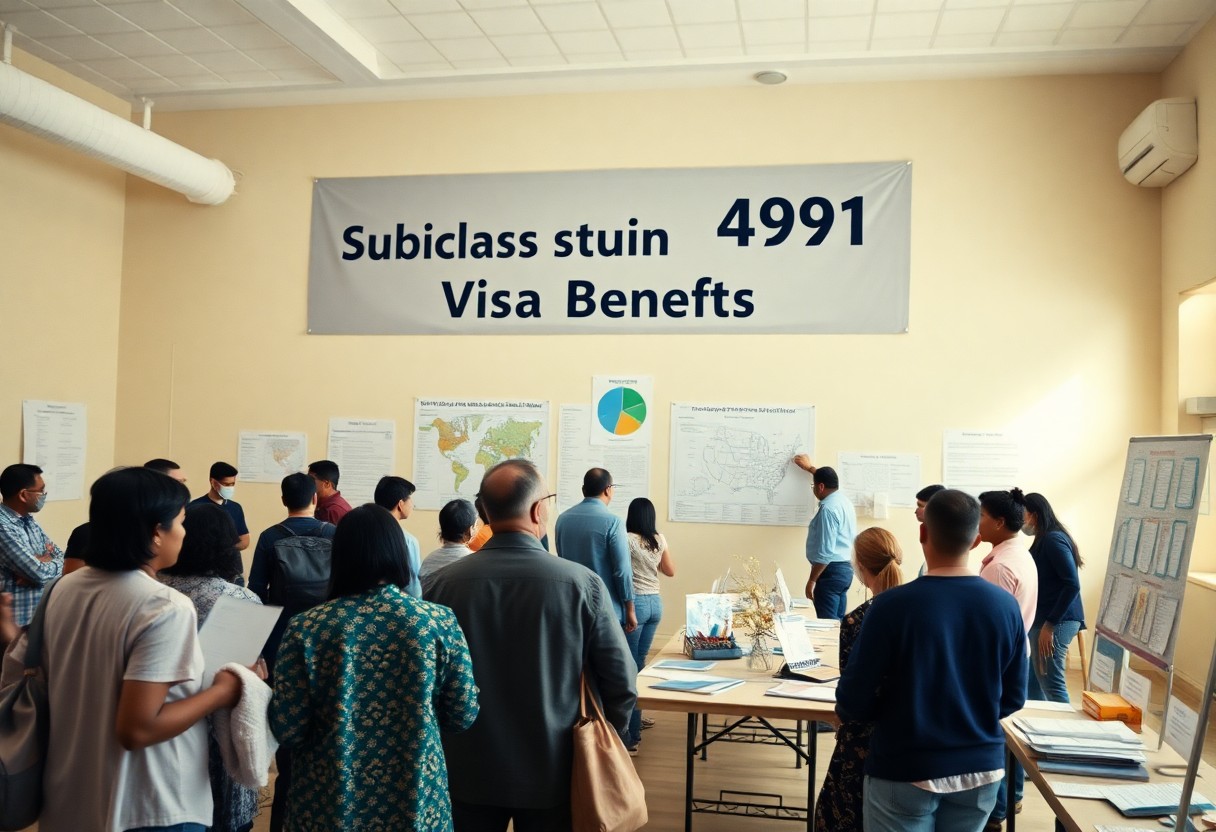
Finding solid family and community support is one of the significant benefits of the Subclass 491 Regional Visa. As you settle into your new life in Australia, local communities offer various resources and programs designed to help you connect with others, providing emotional and social support. Engaging with these networks not only eases the transition but also fosters a sense of belonging, which is necessary for your overall well-being and success in the region.
Family Members Eligibility
Under the Subclass 491 Visa, you can include eligible family members in your application. This includes your partner, dependent children, and other dependents like stepchildren or relatives with substantial personal care needs. Each family member included must meet specific eligibility criteria, ensuring they can also benefit from living and working in regional areas alongside you.
Community Integration Programs
Community integration programs play a vital role in helping you and your family settle comfortably in your new environment. These programs, often facilitated by local councils or organizations, include language classes, cultural workshops, and social events aimed at promoting interaction with the local community. Participating in these programs helps you establish a support network while enhancing your understanding of Australian culture.
Many regions offer tailored community integration programs to engage new migrants effectively. For example, groups may host multicultural festivals or community fairs, allowing you to meet locals and other migrants while sharing your cultural background. Additionally, language assistance programs focus on improving your communication skills, necessary for navigating daily life and finding employment. Being actively involved not only enriches your experience but also positions you as a valued member of the community.
Comparing Subclass 491 with Other Visa Options
| Visa Type | Key Differences |
|---|---|
| Subclass 189 | Permanent residency without regional obligation; broader in scope but competitive. |
| Subclass 482 | Temporary work visa; employer sponsorship required; does not lead directly to permanent residency. |
Subclass 189 vs. Subclass 491
Subclass 189 offers immediate permanent residency with no requirement to live in a regional area, making it more appealing to some skilled workers. In contrast, Subclass 491 requires a commitment to regional living for at least three years before you can apply for permanent residency, but it often has a lower points threshold, making it accessible to a wider range of applicants.
Subclass 482 vs. Subclass 491
While Subclass 482 is a temporary work visa tied to employer sponsorship, Subclass 491 is designed for individuals seeking regional pathways with future permanent residency. Subclass 491 does not depend on a specific job offer, giving you more flexibility in choosing where to live and work.
Subclass 482 can lead to permanent residency through additional steps but requires continued employment with the same employer. In contrast, Subclass 491 does not lock you into an employer relationship, allowing more freedom to explore job opportunities across designated regional areas. This independence often leads to a better integration into community life, while still being able to pursue a long-term immigration strategy.
Challenges and Considerations
While the Subclass 491 visa offers numerous benefits, it is imperative to be aware of the potential challenges and considerations. Limited access to certain services, varying job markets, and less social infrastructure compared to metropolitan areas can impact your overall experience. Additionally, your commitment to a regional lifestyle may require adjusting to different cultural norms and living conditions.
Visa Conditions
The Subclass 491 visa comes with specific conditions that you must adhere to, including living and working in a designated regional area for a minimum of three years. Failure to meet these requirements may jeopardize your visa status and ability to secure permanent residency.
Regional Living Considerations
Living in regional areas presents unique experiences, with limited amenities compared to major cities. Access to public transport, healthcare services, and educational facilities may not be as robust, which requires careful planning and research on your part. Understanding the local community dynamics is vital for a smoother transition.
Regional living can offer a slower pace and a strong sense of community, but it also means fewer resources. For instance, employment opportunities might be less varied, with certain industries dominating the job market. You may need to be flexible with job roles and salary expectations. Additionally, understanding local customs and building connections within the community can enhance your experience, making it imperative to immerse yourself in regional culture and networking events.
Conclusion
Upon reflecting on the benefits of the Subclass 491 Regional Visa, you can appreciate the unique opportunities it presents for skilled migrants seeking a pathway to permanent residency in Australia. This visa enables you to live and work in regional areas while enjoying access to various support services and incentives. By choosing this pathway, you enhance your employability and contribute to regional development, ultimately paving the way for new prospects for you and your family.
FAQ
Q: What is the Subclass 491 Regional Visa?
A: The Subclass 491 Regional Visa allows skilled workers to live and work in designated regional areas of Australia for up to five years. It is intended for individuals who have a relevant skill and have been nominated by a state or territory government or an eligible family member.
Q: What are the eligibility requirements for the Subclass 491 Regional Visa?
A: Applicants must have a relevant occupation on the skilled occupation list, be under 45 years of age, meet English language requirements, and be nominated by a regional state or territory government or have a family member residing in a designated regional area.
Q: What are the benefits of holding a Subclass 491 Regional Visa?
A: Benefits include the ability to live and work in regional areas, access to Medicare, the opportunity to apply for permanent residency through the Subclass 191 Visa after meeting specific conditions, and potential pathways to family sponsorship.
Q: Can family members accompany me on the Subclass 491 Regional Visa?
A: Yes, eligible family members can be included in your application. This includes your partner, dependent children, and certain other relatives.
Q: How does the Subclass 491 Regional Visa impact my pathway to permanent residency?
A: The Subclass 491 Visa provides a pathway to permanent residency through the Subclass 191 Visa after living and working in a designated regional area for at least three years and meeting income requirements.
Q: What are the conditions I must comply with while on a Subclass 491 Regional Visa?
A: Visa holders must live, work, or study in a designated regional area, comply with the conditions of the visa, and notify the Department of Home Affairs of any changes in circumstances, such as changes in employment or address.
Q: How can I transition from a Subclass 491 Regional Visa to a Subclass 191 Visa?
A: To transition to a Subclass 191 Visa, you must have held the Subclass 491 Visa for at least three years, have a valid visa at the time of application, and meet specified income requirements during that period.