
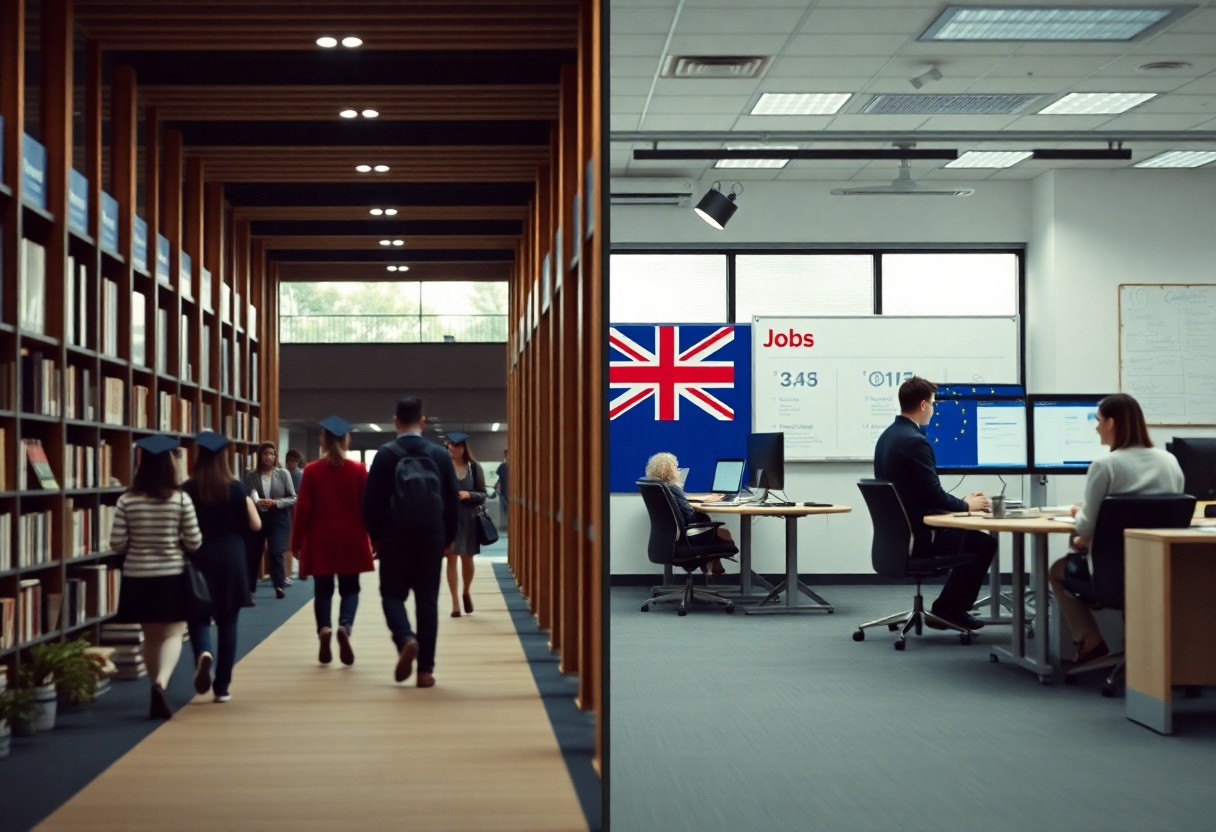
Skilled migration and education opportunities in Australia present distinct pathways for you as an aspiring immigrant. A Student Visa allows you to live and study in Australia, typically focusing on academic pursuits, while a Skilled Visa enables you to work and contribute to the Australian economy, targeting professions in demand. Understanding the key differences, including application requirements and eligibility criteria, is important for making an informed decision that aligns with your personal goals and career aspirations.
Key Takeaways:
- A student visa is intended for individuals pursuing full-time education in Australia, while a skilled visa is for those with specific skills needed in the Australian workforce.
- Student visas allow holders to work limited hours during their studies, whereas skilled visa holders can work unrestricted.
- Student visas typically require enrollment in a registered course, while skilled visas assess qualifications and work experience in a relevant occupation.
- Duration of stay for student visas generally aligns with the length of the course, while skilled visas allow for longer-term residency, often leading to citizenship.
- Student visa applications often necessitate proof of financial capability for tuition and living expenses, while skilled visa applications require demonstration of work skills and qualifications.
- Student visa holders must maintain satisfactory academic performance to remain in Australia, while skilled visa holders are usually on a points-based system evaluating work experience and qualifications.
- Pathways exist for student visa holders to transition to skilled visas post-graduation if they meet the required skills assessment criteria.

Overview of Student Visa
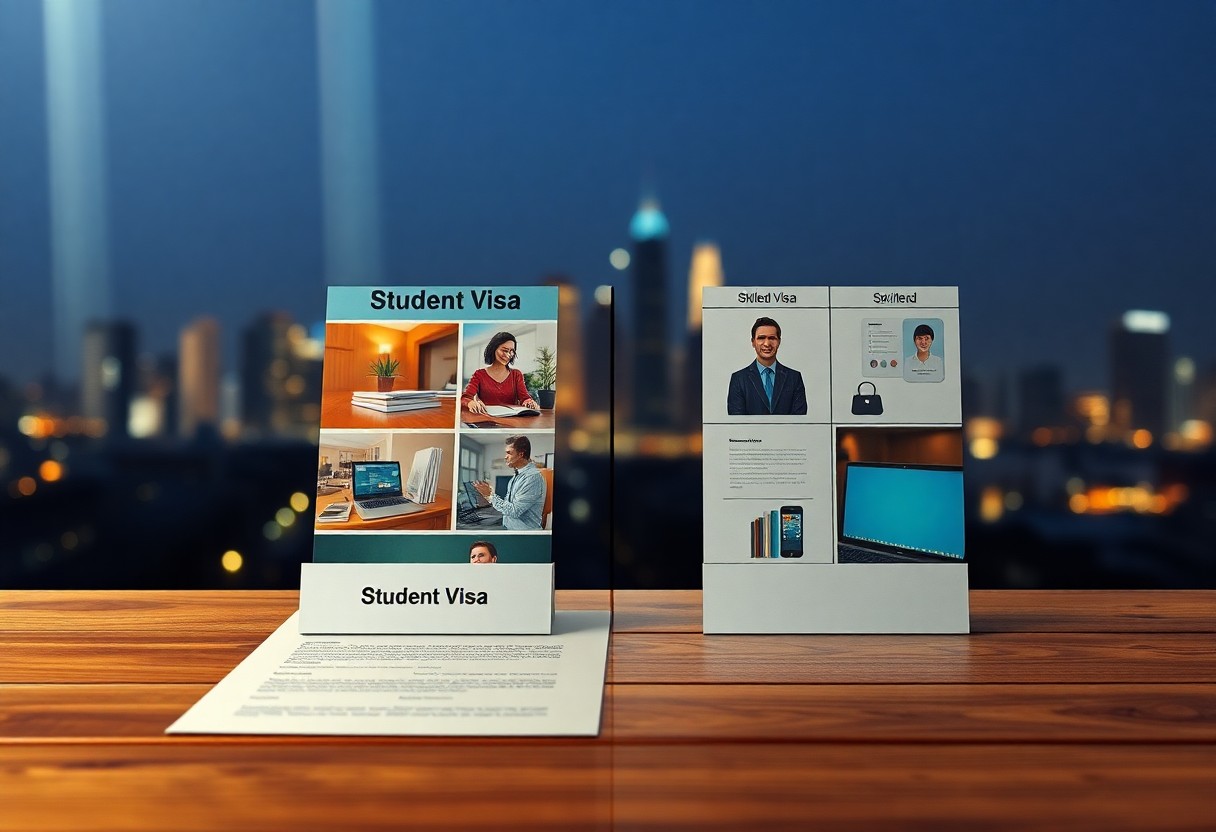
A Student Visa (subclass 500) allows you to stay in Australia temporarily to study full-time in a recognized educational institution. This visa not only facilitates your education but also permits limited work rights, enabling you to gain experience while studying. Ensuring compliance with your visa conditions is necessary for maintaining your legal status during your studies.
Eligibility Requirements
To qualify for a Student Visa, you must be enrolled in a registered course, possess adequate health insurance, and prove your ability to support yourself financially while in Australia. Additionally, you need to meet English language proficiency requirements determined by your intended educational institution, as well as any specific prerequisites that may apply to your chosen course.

Duration and Conditions
The duration of your Student Visa aligns with the length of your course, typically ranging from one semester to five years. Conditions attached to the visa include maintaining enrollment, achieving satisfactory course progress, and adhering to work limitations, which generally permit you to work up to 40 hours per fortnight during term and unlimited hours during breaks.
Student Visa holders often experience a flexible duration, allowing for extensions if you continue with another course or need additional time. Visa holders must renew their visa or apply for a different kind before the current one expires if staying longer than initially planned. Stay informed about your specific obligations, such as maintaining consistent attendance and progress in your studies, to avoid any issues that could impact your visa status.
Overview of Skilled Visa
A Skilled Visa in Australia facilitates the migration of individuals possessing specific skills and qualifications that are in demand in the Australian labor market. This visa category aims to address skill shortages and promote economic growth by allowing skilled workers to contribute to various industries. Applicants can apply for these visas based on their occupation, which must be listed on Australia’s Skilled Occupation List (SOL).
Eligibility Requirements
To qualify for a Skilled Visa, you must meet several eligibility requirements, including having a relevant qualification, sufficient work experience, and a suitable score in the points test. Additionally, you must demonstrate English language proficiency and obtain a skill assessment from a designated authority. Age limits may apply depending on the specific visa subclass.
Types of Skilled Visas
Several types of skilled visas cater to different employment needs and circumstances, including the General Skilled Migration (GSM) program, Employer-Sponsored Visas, and the Regional Sponsored Migration Scheme (RSMS). Each category serves specific goals, whether it’s attracting independent skilled workers or addressing regional labor market needs. They include various subclasses that emphasize different requirements.
| Skilled Independent Visa | Allows skilled workers to live and work permanently without employer sponsorship. |
| Employer Nomination Scheme | Requires employer sponsorship for skilled workers in permanent roles. |
| Skilled Nominated Visa | Requires state or territory nomination for skilled workers in demand. |
| Regional Skilled Visa | Focuses on addressing skill shortages in regional Australia. |
| Graduate Temporary Visa | For international students allowing them to work temporarily after studies. |
In Australia, skilled migration options allow you to choose from various pathways that suit your professional journey. Each visa type serves distinct purposes, addressing specific skill shortages, economic needs, and labor market demands. You can select the most appropriate visa category by evaluating your qualifications. The pathway may lead to permanent residency based on your occupation and experience. Recognizing these opportunities can significantly enhance your career prospects in Australia.
- Skilled Independent Visa: Permanent residency without sponsor.
- Employer Nomination Scheme: Requires employer support for permanent roles.
- Skilled Nominated Visa: State nomination for skilled occupations.
- Regional Skilled Visa: Focus on regional employment needs.
- Graduate Temporary Visa: Opportunities post-study work.
Key Differences Between Student and Skilled Visas
Purpose of Visa
The student visa primarily allows you to enroll in full-time study programs at certified educational institutions in Australia. In contrast, the skilled visa aims to fill skill shortages in the Australian labor market, allowing you to work in specific occupations deemed valuable to the economy.
Work Rights
With a student visa, your work rights are limited, permitting you to work up to 40 hours per fortnight during your studies and unlimited hours during semester breaks. On the other hand, a skilled visa grants you the opportunity to work full-time in your nominated occupation, providing a pathway to permanent residency.
The work rights associated with a skilled visa are significant; they enable you to immerse yourself in the job market, gaining relevant Australian experience and enhancing your employability. This full-time work status not only supports financial stability but also strengthens your application for permanent residency through the points-based immigration system. Earning while you contribute to the economy can significantly impact your long-term goals in Australia.
Application Process Comparison
| Student Visa Application Process | Skilled Visa Application Process |
|---|---|
| Submit an application online, providing academic and financial documents. | Begin with a skills assessment through a relevant authority, followed by an Expression of Interest (EOI). |
| Provide proof of English language proficiency, health insurance, and character documents. | Receive an invitation to apply, then submit the visa application with all supporting documents. |
| Attend an interview if requested by the Department of Home Affairs. | Health and character checks must be undertaken for all applicants. |
Student Visa Application Process
The application process for a Student Visa (subclass 500) involves submitting your application online, including necessary documents that demonstrate your enrollment in a recognized institution, financial capacity, and English language proficiency. You must also obtain health insurance and undergo relevant character checks, ensuring you meet the Department of Home Affairs requirements.
Skilled Visa Application Process
For a Skilled Visa, you start with a skills assessment through the appropriate assessing authority. After acquiring a positive skills assessment, you submit an Expression of Interest (EOI) through the SkillSelect system. If selected, the next step is to submit a complete visa application with thorough documentation, including relevant work experience, qualifications, and English proficiency.
The Skilled Visa application process can be complex and may take several months due to the need for a skills assessment and potential waiting times for invitations. Applicants are often advised to ensure that all documents are accurate and comprehensive to avoid delays. As skilled occupations are in high demand, presenting a strong profile can enhance your chances of receiving an invitation quickly. Understanding each step will prepare you to navigate the process effectively.
Benefits of Each Visa Type
Each visa type offers distinct benefits tailored to your specific needs and goals. A student visa provides access to quality education, allowing you to immerse yourself in Australia’s renowned academic environment, while a skilled visa opens doors to employment opportunities in key industries, providing a pathway to permanent residency.
Advantages of Student Visa
With a student visa, you gain the chance to study at reputable institutions, often with eligibility for part-time work, which can help you cover living expenses. Furthermore, it allows you to experience the Australian culture, make international connections, and enhance your employability through specialized education, all while residing in Australia.
Advantages of Skilled Visa
A skilled visa not only provides immediate work rights but also enhances your professional profile. It’s designed for individuals with in-demand skills, which means you can secure higher-paying positions and contribute significantly to the Australian economy.
Eligible occupations under the skilled visa program offer pathways to permanent residency, meaning your hard work can lead to long-term stability in Australia. For example, those in fields like healthcare, engineering, and IT often receive priority processing, making it quicker to achieve residency. Additionally, a skilled visa may also grant access to family sponsorship options, allowing you to reunite with loved ones in Australia.

Challenges and Considerations
Navigating the complexities of student and skilled visas requires careful consideration of various challenges. Understanding the distinct limitations and obligations of each visa type is crucial for making informed decisions about your migration path, ensuring that you meet your personal and professional goals while complying with Australian regulations.
Limitations of Student Visa
With a student visa, your work rights are often restricted, typically allowing part-time work of up to 40 hours per fortnight during classes, limiting your ability to financially support yourself. Additionally, your visa ties you to a specific course and educational institution, reducing flexibility if you wish to change programs or schools.
Limitations of Skilled Visa
Skilled visas come with the challenge of a competitive selection process, requiring you to secure a job offer or meet specific skill assessments. Furthermore, you may face restrictions based on age, occupation demand, and English proficiency, which can impact your eligibility and the timeline for obtaining your visa.
The skilled visa application process can be lengthy and expensive, often taking several months or even years to complete. If your skills or qualifications do not match the current market demand, you may need to seek additional training or experience to bolster your application. It’s also important to stay informed about changes in immigration policies that can affect your prospects, as these can impact your plans for settlement in Australia.
Conclusion
As a reminder, understanding the difference between a student visa and a skilled visa in Australia is important for your immigration planning. A student visa allows you to study full-time, while a skilled visa is designed for professionals seeking permanent residency based on their qualifications and work experience. Depending on your goals—whether pursuing education or advancing your career—you must choose the visa that aligns with your aspirations. Ensure you thoroughly research and fulfill the requirements for the visa that best fits your situation.
FAQ
Q: What is a Student Visa in Australia?
A: A Student Visa allows international students to study full-time in a recognized educational institution in Australia. It typically permits the holder to work up to 40 hours per fortnight during the academic session.
Q: What is a Skilled Visa in Australia?
A: A Skilled Visa is designed for individuals with specific skills needed in the Australian labor market. It allows visa holders to live and work in Australia permanently or temporarily based on their qualifications and work experience.
Q: How long can I stay in Australia with a Student Visa?
A: The duration of a Student Visa depends on the length of the course of study, typically ranging from six months to five years.
Q: How long can I stay in Australia with a Skilled Visa?
A: The stay period for a Skilled Visa varies. A temporary Skilled Visa may last up to four years, while a permanent Skilled Visa allows indefinite residency.
Q: What are the eligibility requirements for a Student Visa?
A: Eligibility for a Student Visa includes enrollment in a registered course, adequate financial means to support living expenses, English language proficiency, and health insurance coverage.
Q: What are the eligibility requirements for a Skilled Visa?
A: Eligibility for a Skilled Visa includes having a qualification or skills in an occupation listed on Australia’s Skilled Occupation List, relevant work experience, and meeting age and language proficiency criteria.
Q: Can I transition from a Student Visa to a Skilled Visa?
A: Yes, it is possible to transition from a Student Visa to a Skilled Visa if you meet the necessary criteria and obtain a suitable occupation in demand in Australia.